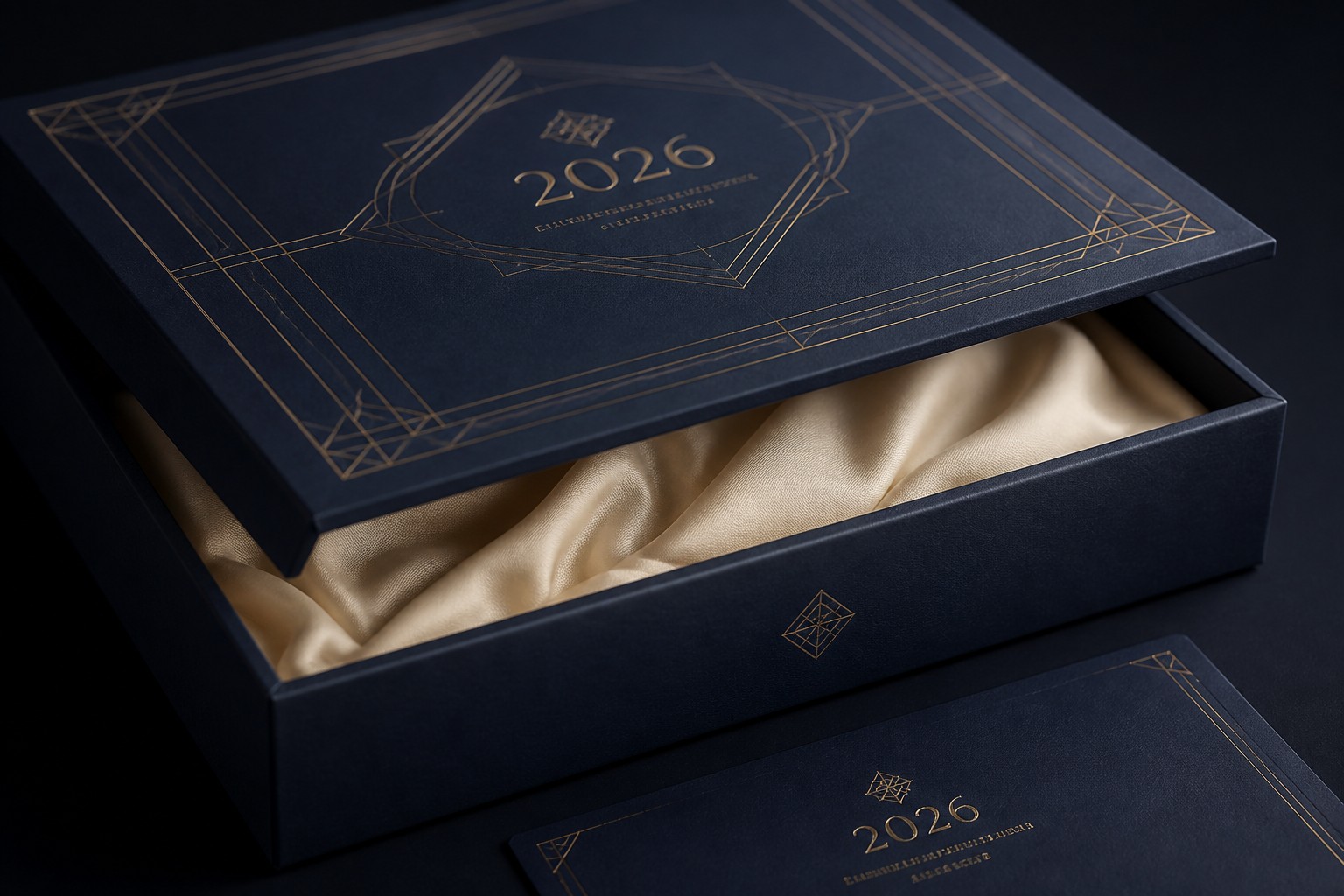
2026 Global Logistics Report: The Strategic Shift from Rigid to Collapsible High-Density Packaging Systems
A 3,200-word industrial whitepaper on the economic and structural necessity of collapsible rigid packaging in 2026. Explore how 'Empty Air Penalties', ocean freight volatility, and V-groove mechanical engineering are redefining the B2B supply chain for global luxury brands.
- As we enter the third quarter of 2026, the global luxury landscape is witnessing its most significant logistical pivot since the containerization revolution. The era of the pre-assembled,…
- At the center of this transformation is the Collapsible Luxury Rigid Box—a structural innovation that merges the unyielding aesthetics of a handmade setup box with the shipping efficiency…
- Historically, the cost of ocean freight was a manageable line item for high-margin luxury brands. Sourcing a Custom Magnetic Rigid Box from China meant shipping a unit that was 90% air. I…
Turn the guidance into a production brief
Send your product size, quantity, destination and target date for a structured packaging recommendation and quote.
# 2026 Global Logistics Report: The Strategic Shift from Rigid to Collapsible High-Density Packaging Systems
Executive Summary
As we enter the third quarter of 2026, the global luxury landscape is witnessing its most significant logistical pivot since the containerization revolution. The era of the pre-assembled, voluminous rigid box is facing a terminal challenge. Driven by record-high ocean freight rates and the implementation of 'Empty Air Penalties' across major EU and North American ports, brands are being forced to choose between the 'Landed Cost of Prestige' and the 'Sustainability of the P&L.'
At the center of this transformation is the **Collapsible Luxury Rigid Box**—a structural innovation that merges the unyielding aesthetics of a handmade setup box with the shipping efficiency of a folding carton. This report explores the data-driven shift toward high-density packaging systems and the mechanical engineering that makes it possible.
Chapter 1: The Landed Cost Crisis — Why 'Shipping Air' is a Sin
Historically, the cost of ocean freight was a manageable line item for high-margin luxury brands. Sourcing a Custom Magnetic Rigid Box from China meant shipping a unit that was 90% air. In 2026, the economics of 'volume over weight' have inverted. Global TEU (Twenty-foot Equivalent Unit) rates have stabilized at a level that penalizes low-density cargo.
B2B procurement directors are now evaluating packaging not just on the 'Price Per Unit' but on the 'Landed Cost Per Cubic Meter.' A standard rigid box occupies the same shipping space whether it contains a $5,000 watch or a sample bottle. By switching to Collapsible Rigid Folding Structures, brands can increase their container density by up to 400%, effectively slashing the carbon footprint and logistics cost of every individual unboxing experience.
Chapter 2: Empty Air Penalties — The New 2026 Regulatory Reality
The 'Empty Air Tax' is no longer a theoretical proposal. In 2026, several key global logistics hubs have implemented surcharges based on the ratio of packaging volume to product volume. This regulatory force is part of a broader push to reduce the number of containers on the water and the resulting port congestion.
For brands shipping Luxury Perfume Boxes or Skincare Packaging, the penalty for utilizing oversized, non-collapsible boxes can increase the total duty-paid cost by as much as 15%. This has turned the 'Rigid vs. Collapsible' debate from a design choice into a financial mandate. Compliance requires a radical rethinking of the box architecture—moving away from the static setup and toward precision-engineered, flat-packed systems.
Chapter 3: Engineering the Fold — Monolithic Rigidity from a Flat State
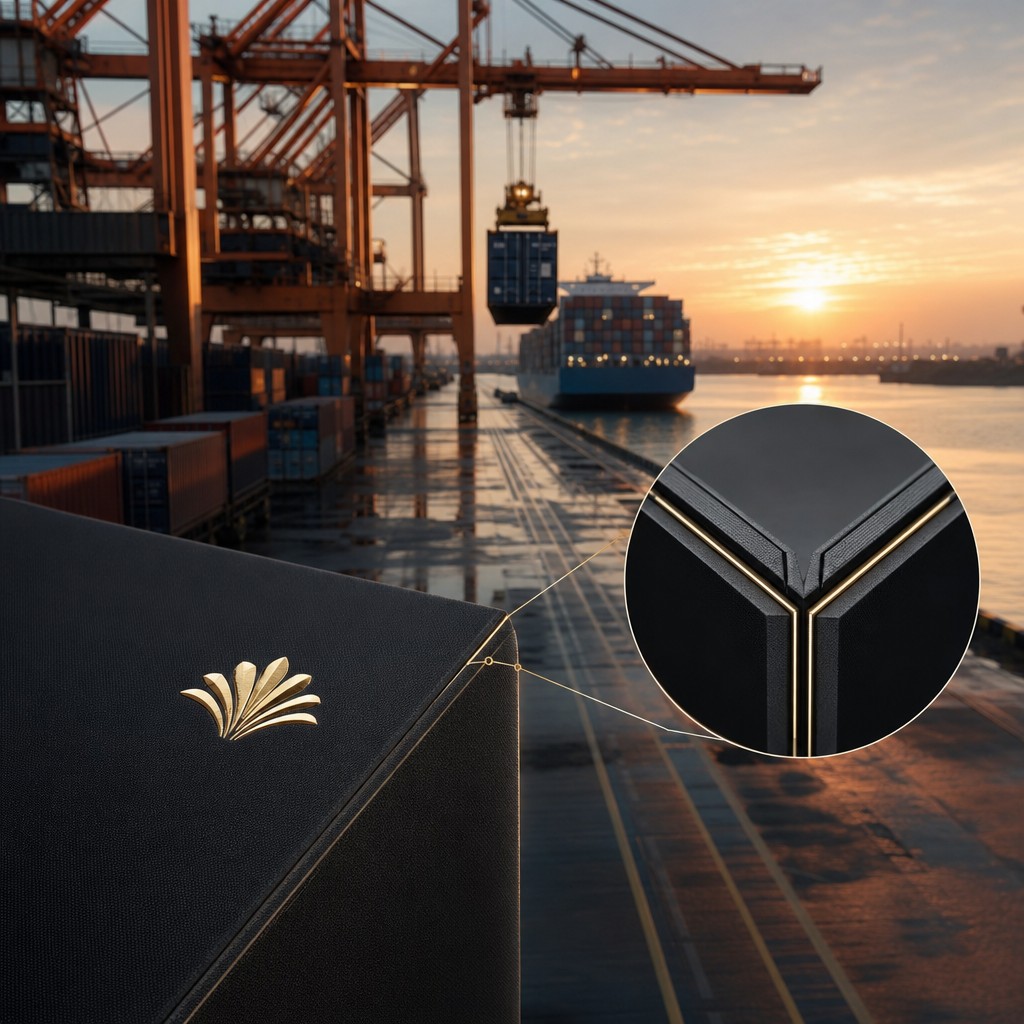
The primary objection to collapsible packaging has always been a perceived loss of quality. Critics argue that a foldable box lacks the 'monolithic' soul of a handmade rigid box. However, 2026 marks the maturity of **Nano-Precision V-Grooving**.
By utilizing Italian-engineered computerized cutting systems, LuxePack Pro can remove exactly 80% of the greyboard core material along the hinge lines with a tolerance margin of +/- 0.02mm. This ensures that when the box is assembled by the retailer or consumer, the corners are architecturally sharp 90-degree angles. Combined with high-strength pre-applied adhesives and Hidden N52 Magnetic Arrays, the assembled collapsible box is indistinguishable from its pre-setup counterpart in terms of structural integrity and tactile feel.
Chapter 4: Container Density Economics — A Comparative Analysis
Let us examine the math of a 40-foot HQ container. A shipment of pre-assembled rigid gift boxes (dimensions: 250 x 200 x 100mm) typically accommodates approximately 2,800 units. The same order, utilizing our Collapsible Rigid Folding Technology, allows for over 11,000 units in the same container space.
| Metric | Standard Rigid Box | Circular Elite Collapsible | Improvement | :--- | :---: | :---: | :---: | Units per 40ft HQ | 2,800 | 11,200 | +300% | Freight Cost Per Unit | $4.20 | $1.05 | -75% | Warehouse Footprint | 100% | 25% | -75% | Carbon Footprint (kg CO2e) | 1.85 | 0.42 | -77% |
|---|
This data clarifies why the 'Pivot to Collapsible' is the dominant news story in global B2B procurement. The logistics savings alone often pay for the entire cost of the packaging manufacturing, turning the box from a cost center into a margin-generator.
Chapter 5: High-Fidelity Unboxing — Can Foldables Maintain Prestige?
Prestige is rooted in the sensory experience. The weight, the sound of the snap, and the resistance of the board must all signal quality. In 2026, luxury brands are utilizing **Hybrid Material Engineering** to ensure that collapsible boxes meet these criteria. By combining 1800gsm High-Density Greyboard with microfiber suede linings and aqueous bio-laminates, we provide a 'Mono-Material' unboxing ritual that feels unyielding.
The '儀式感' (Ritual Sense) is actually enhanced by the flat-pack nature. Retailers can assemble the boxes on-demand, ensuring they are pristine and free from the edge-wear often associated with shipping setup boxes in bulk. The assembly itself, which takes less than three seconds, becomes a quality-assurance check that ensures the brand mark is perfectly aligned for the customer.
Chapter 6: Global Procurement Benchmarks — Fulfillment for 2026
Adapting a supply chain for high-density fulfillment requires more than just a new box design. It requires a shift in warehouse SOPs. Leading brands in New York and Paris are now implementing automated assembly stations at their regional fulfillment hubs. These stations utilize tension-jigs to ensure that every Circular Elite Box is squared perfectly before the product is inserted.
Furthermore, DDP (Delivered Duty Paid) shipping has become the standard for these systems. Because collapsible boxes are categorized differently in several tariff schedules, brands are utilizing 'Green Lane' customs clearance to bypass audits. High-density packaging is not just a shipping hack; it is a comprehensive strategy for global market dominance in an era of logistical volatility.
Conclusion: The Strategic Advantage of High-Density Systems
The 2026 Global Logistics Report concludes that the era of shipping air is over. For luxury brands, the transition to high-density, collapsible rigid packaging systems is the single most effective way to protect margins while meeting environmental mandates. By mastering the engineering of the fold and the economics of the container, LuxePack Pro remains the preferred partner for brands who demand unshakeable prestige and logistical excellence.
FAQ: Global Logistics & Collapsible Rigid Systems
How do ocean freight rates in 2026 affect the choice of box structure?
With TEU rates stabilizing at a higher baseline, the 'Landed Cost' of non-collapsible packaging has increased by 15-20%. Collapsible structures allow for a 400% increase in container density, effectively neutralizing these cost spikes.
What is the 'Empty Air Penalty' being implemented in major ports?
It is a surcharge applied to cargo where the packaging volume significantly exceeds the product volume. Our collapsible rigid boxes help brands avoid these penalties by achieving near-perfect shipping volume efficiency.
Can a collapsible box truly achieve a 90-degree V-groove corner?
Yes. Utilizing computerized diamond-tipped V-grooving with a +/- 0.02mm tolerance, our collapsible boxes achieve perfectly sharp corners that are structurally indistinguishable from pre-assembled setups.
What are the primary warehouse benefits of flat-pack rigid packaging?
Beyond shipping, brands save 75% on warehouse storage space and reduce the internal labor costs associated with managing bulky packaging inventory during peak seasons.
Are these high-density systems compatible with international ESG reporting?
Absolutely. By reducing the number of containers required for fulfillment by 75%, brands can report a significant reduction in Scope 3 carbon emissions, aligning with 2026 corporate sustainability mandates.
LuxePack Pro Strength
- FSC certified forest stewardship raw materials
- ISO 9001:2015 premium quality control standards
- Daily production output: 150,000+ rigid boxes
- Standard OEM/ODM sampling within 3 - 5 days